A professional treatment works more smoothly when the technician can reach the right parts of the property and the homeowner has already removed items that should not be in the treatment area. Knowing how to prepare your yard for mosquito treatment in Connecticut is less about doing the technician’s job and more about creating safe access, pointing out sensitive areas, and reducing the standing water that can keep producing mosquitoes between visits.
Mosquito Stop states that customers do not need to be home for routine treatment, but the company notifies customers before service and sends confirmation afterward. That makes pre-visit preparation especially important for mosquito barrier and tick-control appointments.
Start With Access: Can the Technician Reach the Property?
Locked gates, blocked side yards, parked equipment, or pets loose in a fenced area can prevent a technician from reaching important treatment zones. If you will not be home, confirm access before the appointment.
Unlock or provide approved access to gates the technician needs.
Move vehicles, equipment, or large items that block the normal route into the yard.
Tell the company about difficult gates, steep areas, drainage features, or sections that should not be entered.
Make sure the technician has the correct address, phone number, and any property-specific instructions.
Remove Children’s Toys, Pet Items, and Outdoor Food
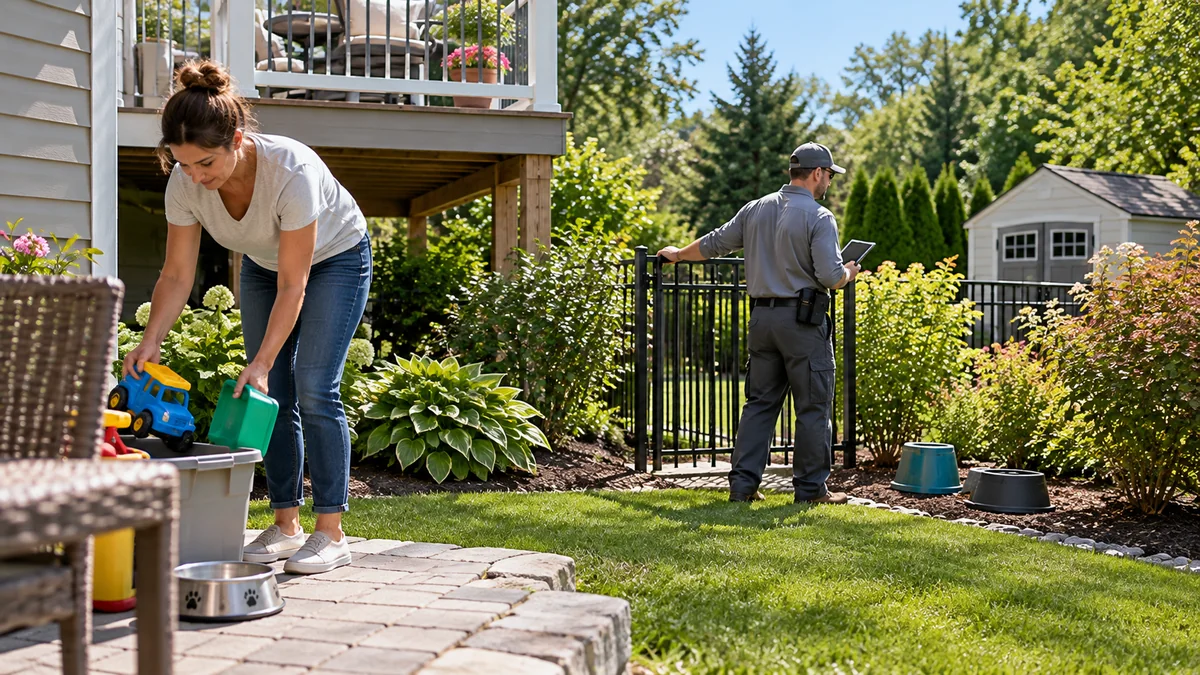
EPA recommends removing children, toys, and pets from an outdoor pesticide application area and keeping them away until the pesticide has dried or for whatever period the product label requires.
| Before the Visit | What to Do | Why |
| Toys / sports equipment | Bring loose toys, balls, ride-on toys, and similar items out of treatment zones. | Reduces the chance of treatment contacting items children handle closely. |
| Pet bowls / toys | Bring food bowls, water bowls, beds, and pet toys indoors or away from the area. | Keeps pet-contact items separate from treated surfaces. |
| Outdoor food / dishes | Remove or securely store food, serving items, and drinkware. | Prevents accidental contamination. |
| Portable furniture / cushions | Move only what the provider asks you to move; keep high-use surfaces identifiable. | Lets the technician understand where people spend time while avoiding unnecessary contact. |
Secure Pets Before the Technician Arrives
Do not rely on the technician to manage a dog, cat, or other animal while entering the yard. Keep pets indoors or in another secure area before treatment begins and follow the product label and provider’s instructions for re-entry.
Mosquito Stop’s FAQ says its treated areas are generally ready for children and animals once the product has dried, often around 30 minutes. The actual pesticide label and technician instructions should control if they differ.
Do a Standing-Water Walk Before Service
Professional treatment works best as part of source reduction. CDC and Connecticut mosquito-management guidance recommend removing standing water where mosquitoes lay eggs.
Empty buckets, toys, wheelbarrows, and other movable containers.
Refresh or clean birdbaths according to public-health guidance.
Check flowerpot saucers and low spots around patios.
Inspect gutters and downspouts for retained water.
Check tarps and pool covers after rain.
Keep swimming-pool filtration and sanitation systems maintained.
Do not dump permanent water features simply because a treatment is scheduled. Tell the technician about ponds, rain barrels, drainage basins, ornamental water features, or other standing-water sources so the correct plan can be discussed.
Point Out Sensitive or Special-Use Areas
A technician should know about areas that deserve special attention or special caution before treatment begins. Clear communication is more useful than assuming the applicator knows how every corner of the property is used.
Vegetable and herb gardens
Pollinator or flower gardens
Fish ponds and water features
Children’s play areas
Dog runs or pet-use zones
Outdoor kitchens and dining spaces
Pools and patios
Beehives or other managed pollinators
The technician can then follow the product label and company procedures for those areas. Do not ask for off-label application or assume every surface should be treated.
For Tick Service, Show the Property Edges
Mosquito and tick service do not always focus on identical places. Mosquito Stop’s tick-control page says its program targets leafy property edges, stone walls, grass, and shrubs where ticks may rest.
If the yard borders woods, brush, a stone wall, a deer path, or a shaded leaf-litter area, point that out. Those details help the technician understand how people and pets move between high-use lawn and edge habitat.
You Usually Do Not Need to Be Home
Mosquito Stop’s barrier-spray page says homeowners do not need to be present for routine treatment. The company notifies customers before the scheduled visit and sends an email confirmation after completion, including which technician performed the service and what was done.
That convenience depends on preparation. If a locked gate, loose dog, or unknown sensitive area prevents access, the technician may not be able to complete the intended treatment.
What if Rain Is in the Forecast?
Weather affects outdoor pesticide applications, but the answer is product- and timing-specific. EPA advises against outdoor spraying on windy or rainy days, and the pesticide label controls application restrictions.
If rain is expected near the appointment, contact the provider rather than canceling or rescheduling based on a generic rule. Mosquito Stop has also published a separate article about what Connecticut homeowners should know when it rains after mosquito treatment.
After Treatment: Follow Re-Entry Instructions
Do not use a fixed internet number as a substitute for the product label. Keep children and pets away until the treated area has dried or for the interval specified by the product label or technician.
Avoid rinsing, pressure-washing, or making other changes to treated surfaces immediately after service unless the provider says it is appropriate. If you are unsure how rain, irrigation, mowing, or other yard work affects the treatment, ask the technician.
A 10-Minute Treatment-Day Checklist
Unlock gates or confirm technician access.
Secure pets indoors or away from the treatment area.
Bring in children’s toys, pet bowls, pet toys, and outdoor food items.
Walk the property and empty removable standing water.
Check pool covers, tarps, gutters, planters, and containers after recent rain.
Identify ponds, gardens, play areas, pet zones, outdoor kitchens, pools, and other sensitive-use spaces.
Point out wooded edges, stone walls, shrubs, or tick-prone transition areas.
Close or secure windows and doors if the provider requests it.
Keep your phone available in case the technician needs clarification.
Follow the completion notice and re-entry instructions before using the yard again.
Preparation Helps the Technician Focus on the Pest Problem
The best pre-treatment work is simple: provide access, remove items that should not be exposed, reduce standing water, identify sensitive spaces, and follow the label. That leaves the technician free to focus on mosquito resting zones, tick habitat, and the treatment plan selected for the property.
Connecticut homeowners can compare Mosquito Stop’s service options, including conventional barrier spray, natural treatment, and tick control, then request a quote through the main site.
Sources and References
Mosquito Stop – Mosquito Barrier Spray
CDC – Mosquito Control at Home
Connecticut Mosquito Management – Control Around the Home
U.S. EPA – Pesticide Safety Tips
Safety Notice
This article is general preparation guidance. Pesticide labels are legally binding instructions and should take priority over general advice. Follow the licensed applicator’s directions for access, weather, sensitive areas, re-entry, pets, children, gardens, water features, and any post-treatment activity.
Frequently Asked Questions
Do I have to be home for a Mosquito Stop treatment?
No. Mosquito Stop states that homeowners do not need to be home for routine treatment. Make sure the technician can access the property and knows about any pets, gates, sensitive areas, or special instructions before the visit.
How long should kids and pets stay off the yard after treatment?
Follow the product label and technician instructions. Mosquito Stop’s FAQ says treated areas are generally ready once the product is dry, often around 30 minutes, while EPA says children and pets should stay away until the pesticide has dried or as directed by the label.
Should I empty standing water before professional mosquito treatment?
Yes, when the water is in removable household containers that can be safely emptied. CDC and Connecticut guidance emphasize source reduction because mosquitoes develop in standing water. Permanent ponds, rain barrels, drainage areas, and other water features should be discussed with the technician rather than altered without a plan.